domenica 16 maggio 2021

Museo delle Forze Armate 1914-1945

ENGLISH LANGUAGE

Last weekend I visited Museo delle Forze Armate 1914-1945 in Montecchio Maggiore (Veneto, Italy).

It is a hidden gem of our territory, a museum created by the love of Giancarlo Marin (president) and Giancarlo Cosaro (vice) and one hundred members of the Associazione Cultori della Storia delle Forze Armate and devoted to memory preservation and diffusion of the period between WW1 and WW2.

The collection is mainly composed by former Italian Army historical pieces and donations of local people whose elders joined the army. Between them a lot of intriguing histories unfold, as the first Italian woman with flight license, or the Italian aviator trying the first Roma - Tokyo raid or the howitzer who stood in Bedeschi's living room (the author of Centomila gavette di ghiaccio, an iconic autobiographic novel set during the Italian expedition against the Sovietic Union in between 1941 and 1943) and many others, which maybe I will tell someday in this blog.

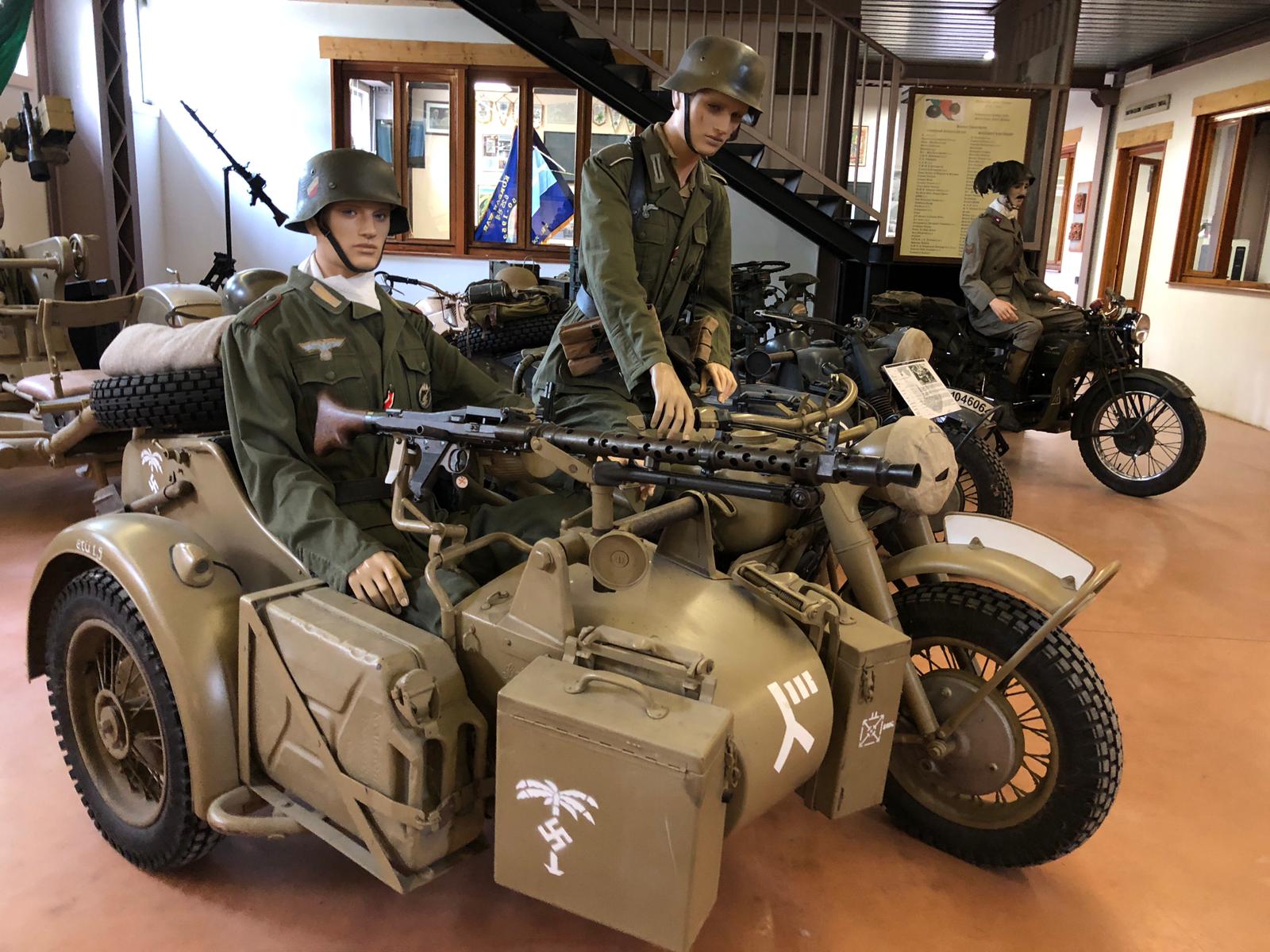
Between the museum rooms you can find weapons, uniforms, guns (many of them) and also bigger vehicles as DAK motorcycles, an Humber Scout Car and USAF M115, a Sd.Kfz.251 Hanomag, some Jeeps and Willis, an L3 Italian Tank and an M15/42 and many more. Then there is an awesome project, I will deal in a separate post.

The museum is totally sustained by its Association member volunteerism and private donations, if you want support them feel free to contact them here and e follow them on social networks (Facebook and Instagram).

Pictures below!

ITALIANO

Lo scorso weekend ho visitato il Museo delle Forze Armate 1914-1945 a Montecchio Maggiore (Vicenza), una gemma nascosta nel territorio, costituito nel 2003 da Giancarlo Marin (presidente) e Giancarlo Cosaro (vice) e sostenuto dal volontariato del centinaio di volontari dell'Associazione Cultori della Storia delle Forze Armate.

Il museo è votato alla preservazione e alla diffusione della memoria del periodo tra la prima e la seconda guerra mondiale, con attenzione particolare al territorio veneto. La collezione infatti è composta principalmente da pezzi storici dismessi dall'Esercito Italiano e dalle donazioni locali, di abitanti della zona i cui avi si sono ritrovati a combattere (e non solo) tra le due guerre mondiali.

Non solo combattere: tra le teche del museo si dipanano pagine di storie poco conosciute come quelle della prima donna italiana con brevetto di pilota o del tentativo di raid aereo Roma - Tokyo o l'obice da salotto di Bedeschi (l'autore di Centomila gavette di ghiaccio, un romanzo autobiografico ambientato durante la spedizione italiana in Russia tra il 1941 and 1943) and many others, which maybe I will tell someday in this blog.

Nelle varie stanze, e nella vasta esposizione all'aperto, trovano spazio armi leggere, uniformi, cannoni e veicoli come motociclette della DAK, Humber Scout Car, USAF M115, un Sd.Kfz.251 Hanomag,  Jeeps e Willis, carri armati leggeri italiani L3 e medi M15/42 e molto altro. V'è poi un altro fantastico progetto che merita un post a parte. 

Il museo è completamente sostenuto dal volontariato dei suoi membri e dalle donazioni private, perciò se volete supportarli contattateli liberamente qui e seguirli sui social (Facebook e Instagram).

E ora un po' di foto!


domenica 9 maggio 2021

New books


Hi all,  quite a long without writing on my blog...well, life gets in the hobby.
Two big news: I got two cats, Pepe and Sally, which keep me busy (and full of fur), and I moved (always in Verona). Some weeks ago I got my new bookcase, so I decided to purchase more books to fill it! Here the picture of the last three the mailman delivered to me.


 As you can see different themes (I hope I will review the books someday):

  • East Africa 1940-1941 (Land Campaign) by Mark Sobisnky: a detailed book about an often forgotten WW2 campaign. Even if the Italian Army, cut away from the homeland, was doomed, his men's toughness and courage give the Commonwealth army a worthy opponent. Plenty of wargaming opportunities, especially for infantry-based rules. A friend of mine suggested Crossfire, I think I will give it a go when I will finish painting an Italian Army for this theatre.
    I also suggest as reading: La caduta dell’impero fascista. La guerra in Africa orientale italiana 1940-1941 by Andrea Santangelo (in Italian only).
  • A Gentleman's War or Glossy Coats and Tin Bayonets by Foley and Whiteman. I came through this on a Facebook group. The reviews were funny. I think it is a modern version of Well's Little Wars. I will try them to play Italian Risorgimento, along with Micheal Leck's Rebels and Patriots.
  • La marca nelle Crociate by Danilo Riponti (Italian). Is a collection of essays about Treviso (a town in northern Italy - Veneto) families in the X-XIII century and their involvement in Crusaders in Holy Land. The interests in Crusades pre-dates this year, thanks to prof. Raccagni involving my club (Band of Butei) in playtesting  Lion Rampant: The Crusader StatesI am trying to figure out a retinue for Lion Rampant which can be used both in Italy and in Holy Land, set at the beginning of the Communal Age, around 1150 AD. More will follow about this too (I hope).

It is all for now, feel free to comment on the blog or on Facebook if you read any of these books or have further suggestions!

Since I know you are curious about the cats:
Pepe on the left (male), Sally on the right (female)

lunedì 4 gennaio 2021

Osprey "Renaissance Armies in Italy 1450 - 1550" review

I just received the recently published Osprey Men-At-Arms 536 "Renaissance Armies in Italy 1450 - 1550". The book presents the usual MAA format and it is tightly packed with historical information, uniformologic details and beautiful illustrations.


The author is G. Esposito, and the booklet is preciously illustrated by the skilled G. Rava, one of my favourite historical illutrators.

You can find details about the main armies of the periods, both Italian (Milanese, Florentine, Papal, Venetian, Kingdom of Naples) and Foreign (Aragonese, French, Imperial German). The illustration are well researched (the commentary plate is one of the most valuable asset of this series), and very inspiring (for those interesting seeing them translated into the wargaming table, check my post). The book also contains other illustrations, also in colour (differently from older Ospreys), but in this volume mostly from the same source/style, I would have preferred a little variation and some real piece of armour, instead than nineteenth century impressions.

Lastly, the book share the the same issues as the previous books about Italian history (e.g. Italian Medieval Armies 1125–1325 and Italian Unification Wars): too much events and armies in the frametime and to little space to deal with them! I understand the limitation imposed by the series format, and I think the author managed to squeeze the essential in it. For this reason I would have loved a longer bibliography, which is instead limited to a couple of volumes for each army involved.

Overall I value positively the book, mainly for its illustrations, for many player it will be a nice introduction to this period.

Images taken from author Facebook page for his concession.


venerdì 1 gennaio 2021

My first article on WSS!


At the end of this difficult 2020, a piece of good news: I published my first article for the popular wargame magazine Wargames, Soldiers & Strategy.

The article, which I wrote in collaboration with Gianluca Raccagni, the author of the recently published Lion Rampant: The Crusader States (electronic and printed sale), features a scenario for the popular Lion Rampant rules.

The scenario is set during the Albigensian Crusade in 13th century France, and it is named THERE WILL BE FLYING STONES.

Since it was chosen as a digital article for WSS 112, you can freely download it from here. Let me know your thoughts about it!

And happy 2021 to you all!

domenica 9 agosto 2020

Hanseatic Cog (Umbum - Clever Peper Ltd)

Here I present a short review of  cardboard Hanseatic Cog from Umbum - Clever Peper.

The finished ship

During lockdown I ordered some Cardboard scenic from the Russian firm Umbum. The range, including many medieval building, the Cog, a Greek Bireme and an Arabian Dhow and many many other things in different scales was designed by Clever Peper Ltd and is available both from the Russian  and the German online shop. Their products are also available through retailers (Amazon and others). I ordered straight from the Russian shop, since I made a massive order and price was very competitive, even with shipping and import taxes added. I thank Eugene for availability and kindness in answering my questions and helping me following my order across half Europe. Their products are designed at approximately scale 1/65 - 1/70 as toys, but RPGgamers started using them as scenics. They also include their miniatures about 28-30 mm in height.

The front of the Box
The rear of the box

The Hanseatic Cog box contains four sprues with numbered pieces, a booklet of instructions, a short rope used for rigging the sails and ...a toothpick! (seems silly, but really useful to remove small cardboard pieces). The set is meant to be assembled without knife/scissors and glue.

Content

The toothpick!
Content/2

A detail of the booklet

The kit took about three and half hours to completion and the only real issue was making the knots right and able to be moved to put into tension the sail. The instruction of real sailors' knots help immersing in the nautical atmosphere. After building it, the kit is ready to be placed on the tabletop. It is about 29 cm long, 8 cm width, 3 cm height of the bulwark, 21 cm for the mast.

Working...in the Arsenale

Here with both my Catalan crew (Admiral Roger Lauria) and Umbum cardboard miniature.


Aggressive Marine ready to assail enemy ships!


In conclusion: the kit is reasonable priced (500 rubles from Russia), and makes surely a nice piece of terrain in any sea city scenario. Maybe it could be also a gaming piece on his own (more to follow).
Admiral Lauria, almughavar and crossbowmen

Catalan-Aragonese ready to become the main Power in 13th century Mediterranean!


sabato 27 giugno 2020

Contrast paint - first impressions


I bought a couple of Games Workshop Contrast Paint (Contrast from now on) one year ago, on the wave of enthusiasm. They have been sitting in a corner of my painting desk until this spring.  I was stuck with little to no willing of painting, so I decided to give them a try. I'm still painting.
I purchased about 3/4 of the line and these are my observation about them so far.


My Contrast collection so far. I should probably buy a rack for display

Contrast are not (of course) colors in the traditional term, since they are meant to paint both base and shades with one passage, so they are rather are highly pigmented inks or shade. Remember: they are very liquid. Colors vary a lot in pigment density and quality, for example Militarium Green is a bit light in pigment and need at least two coats to be efficient, otherwise it could result in speckled figures. Black Templar is also not very pigmented and can result in "not so black" color. Iyanden Yellow is, so far, my favorite color, even if tend to dissociate yellow and orange pigments so it need to be lay with a bit of attention and remember to shake the pot before painting.


Painting with Contrast only seems easy: painting with contrast at basic level is very accessible, but I think that achieving a high quality model requires a good hand skill, maybe at the same level than traditional painting: you can direct the flow of this liquid color, and the effect varies with the brush size, quantity of color absorbed in it, the pressure, the way you lay the color them, how many layer of paints you lay. So lot of different results, actually. Basilicanum Grey is paradigmatic: can vary a lot with the quantity of liquid placed on the miniature.

Cloak on left model, mail and sword on right one, are both painted with Basilicanum Grey.
Hard to believe, I know.

The primer is very important: I found myself at ease with Wraithbone spray but you really have to experiment: the final result can vary a lot. Only remind that a smooth basecoat is essential for let Contrast flow, the risk is the color could evidence the granularity of the primer.

Base Wraithbone is essential. It is the same primer but you can lay it with a brush: you will need it to cover the smears. Important! With small exceptions they're not able to cover other colors smear, and I suggest painting the figures from lighter to darker colors for this reason. 

Attention on metals! I tried using Contrast to shade Vallejo real metal colors and I found both Wildwood and Skeleton Horde tend to give them a brass effect. I decided for now to use non metal color (i.e. Basilicanum Grey, see picture above).


Not the best picture, but the gun was painted with Vallejo Silvermetal and then washed with Skeleton Horde. The result are brassy shadows. Other colors are Contrast.


Which miniatures are (in my opinion) best painted with contrast paint?  Well they work greats on simple, plain clothes and fur (both in clothes and on animals, including horses). I would avoid armies with a lot of tiny details (as Napoleonics), if you want to go full Contrast. Otherwise, you could use contrast paint for basic uniform and then revert to traditional painting for details. Also bear in mind that the colors selection is (compared with other brands) quite small: you will probably have issues finding the right shade of blue for that particular regiment in that particular campaign. But...you can always mix them and create new colors, I found no particular issues with that, just remember avoid mixing with water. 

In conclusion: the miniatures are not gonna painting themselves, but choosing the right subject they allow to spare an enormous amount of time and going right into playing with an army nicely painted (using it unpainted was never an option). I am very happy with them and I must thank them for getting back to painting.


domenica 14 giugno 2020

Swedish Thirty Years War Army


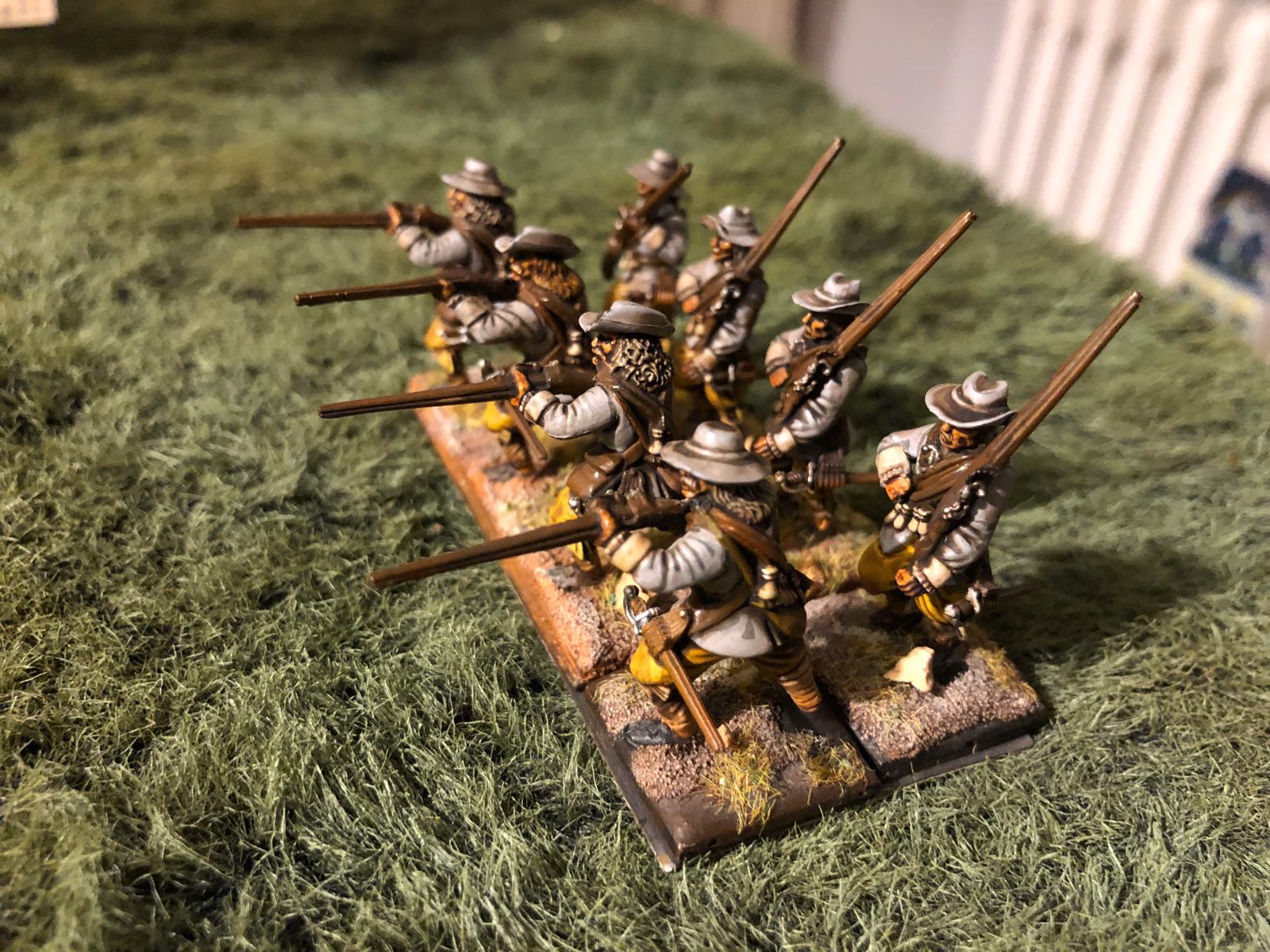
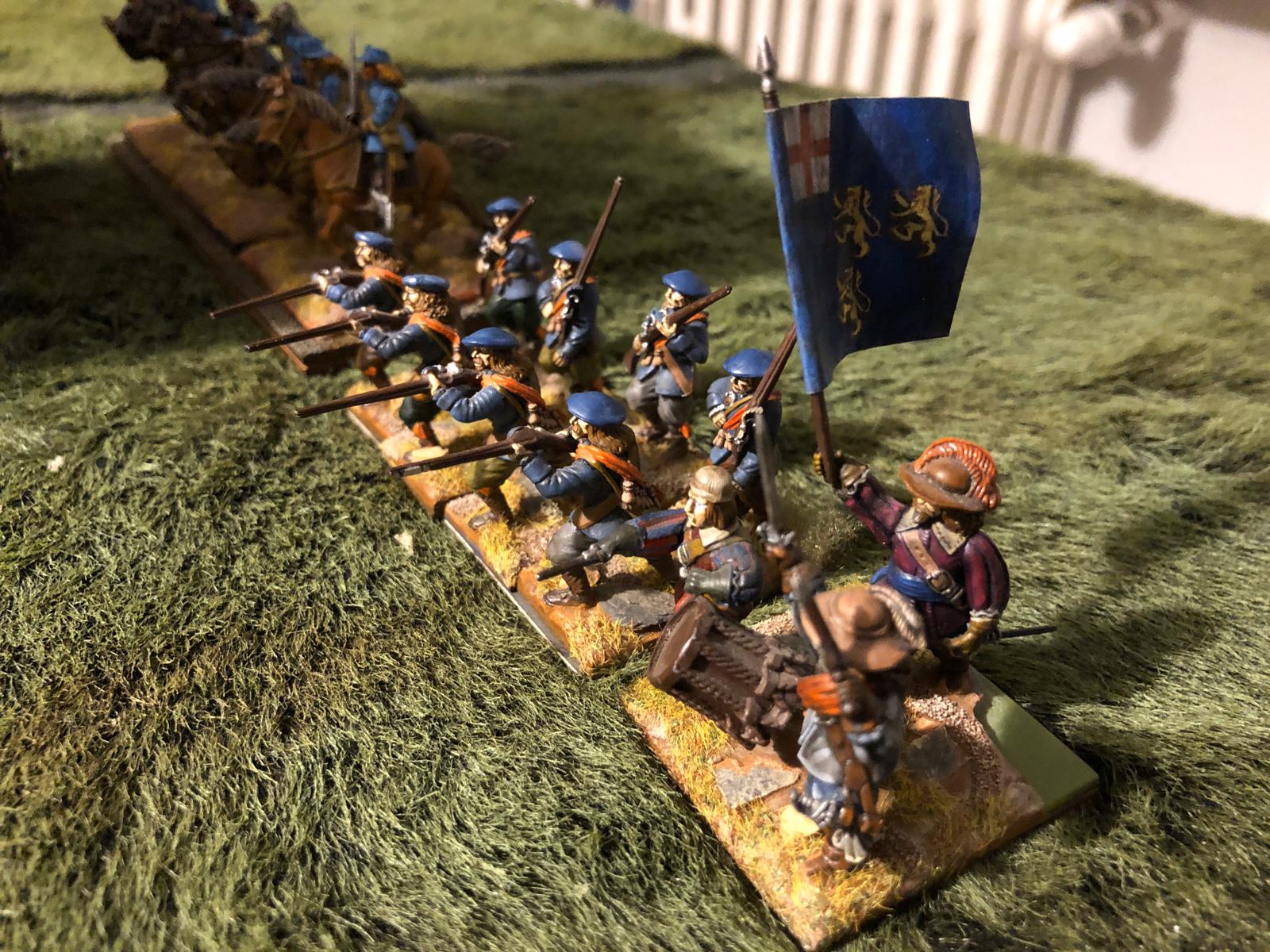
The Swedish army was the most notable one during Thirty years war (TYW): well trained, well led, achieved many successes on the battlefield and still sparks inspiration between wargamers.

I found a fabulous offer on the net for a beautifully painted  Swedish army and couldn't hold myself from buying it! A lot of infantry and cavalry ready to be led by Gustavus Adolphus! Its only drawback was the artillery: only one leather gun. I remedied painting a heavy gun: a great chance to test also GW new contrast paint (but I'll talk about them in another post). I plan to use them with Tercios for great battles and Pikeman's Lament for smaller clashes.


Here is a gallery of the miniatures, kindly host by Paolo's display closet, and a first playtest of Pikeman's Lament (more in another post).